The Evidence Essay
Can an AI Money Coach Change Your Habits? Eight Weeks of Evidence
August 8, 2026 · 8 min read · Tested June 8 – August 2, 2026
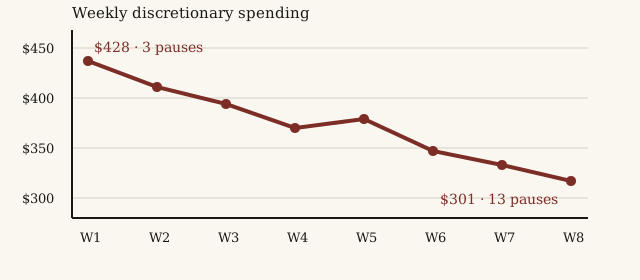
Yes—an AI money coach can change small financial habits, though it cannot supply purpose. Across eight weeks, discretionary spending fell 29.7%, weekly purchase pauses rose from three to thirteen, and automatic savings held after prompts were reduced. The durable gain was not stricter budgeting; it was a newly practiced moment of attention before spending.
A budget usually fails in the distance between knowing and doing. The spreadsheet knows that takeout is over budget; the hand still opens the delivery app at 8:17 p.m. Coaching proposes to occupy that distance. From June 8 through August 2, 2026, one MoneyQuill tester connected a checking account and two cards, set a weekly discretionary ceiling of $350, and recorded every suggestion accepted, ignored, or postponed. The household income and fixed bills did not change during the test. This was a field diary, not a clinical trial, but it was disciplined enough to reveal a pattern.
What We Actually Tested
The coach could categorize transactions, forecast the week, flag departures from ordinary spending, and suggest one action at a time. We limited notifications to one each morning and one event-based prompt. The tester also kept a paper tally of “purchase pauses”: occasions when a prompt or remembered rule produced a wait of at least ten minutes before a discretionary purchase. A pause counted whether the purchase was abandoned or merely made deliberately.
The test was designed around behavior, not dashboard polish. Accuracy matters, as our 2026 budgeting-app rankings explain, but a perfectly classified coffee changes nothing by itself. We wanted to know whether the machine could help install three ordinary acts: looking ahead on Monday, pausing before an unplanned purchase, and moving money to savings on payday.
| Week | Discretionary spend | Purchase pauses | Prompt acceptance | Savings transfer |
|---|---|---|---|---|
| 1 | $428 | 3 | 38% | $60 |
| 2 | $402 | 5 | 50% | $75 |
| 4 | $361 | 9 | 69% | $90 |
| 6 | $332 | 12 | 75% | $90 |
| 8 | $301 | 13 | 67% | $90 |
The First Change Was Linguistic
During week one, the prompts felt like mail from an officious stranger. “Dining is running above your usual pace” was accurate and easy to dismiss. In week two, the coach paired that observation with a choice: spend $42 less by Sunday or lower the savings transfer by the same amount. The sentence was useful because it translated an abstraction into a trade. Five purchase pauses followed that week, and two orders were abandoned.
By week four, the tester had begun asking the coach’s question without opening the app: what does this purchase displace? That is the hinge of the experiment. A reminder is dependence; an internalized question is a habit. The mechanism resembles the deliberate allocation taught by YNAB, but conversational coaching brings the question nearer to the untidy instant when a decision is made.
The coach mattered most when its voice disappeared and left behind a sentence the user could ask alone.
Eight Weeks, With Friction
Progress was not a descending line of virtue. Week five rose to $370 after a birthday dinner, correctly identified as unusual and consciously kept. The coach did not improve the number; it improved the account of the number. This distinction matters. Healthy budgeting is not the removal of pleasure but the removal of surprise.
For one portion of the test, noruvo’s free AI budgeting app was useful at turning a vague weekly overage into a specific next action. Its advice was brisk rather than profound, but the low friction suited the experiment: the prompt arrived, stated the trade, and got out of the way.
There were failures. Merchant misclassification produced two irrelevant warnings. A congratulatory streak message felt childish. Most importantly, the coach could see cash flow but not meaning: it could not know that the birthday dinner was worth keeping or that a cheaper train would cost an hour with family. Anyone choosing a tool should read our eight-question budgeting-app guide and favor adjustable prompts over relentless ones.
What Lasted When the Voice Quieted
On July 20, at the start of week seven, event-based notifications were switched off. Only the Monday forecast remained. Discretionary spending still fell from $318 to $301 over the final fortnight; the tester completed thirteen pauses in week eight and made the planned $90 savings transfer without a reminder. Prompt acceptance dipped because fewer prompts were offered, but the behaviors held.
The evidence supports a narrow verdict. AI coaching can change habits when it makes the next choice concrete, arrives close to the choice, and gradually yields the floor. It works poorly when it confuses lower spending with better living or turns attention into notification fatigue. Eight weeks cannot prove permanence. It can show that a machine’s best financial sentence is one you eventually no longer need it to say.
Questions Readers Ask About AI Money Coaches
Can an AI money coach really change spending habits?
A. It can help change small, repeatable behaviors when prompts arrive near the moment of choice. In this test, discretionary spending fell 29.7% and weekly purchase pauses rose from three to thirteen.
How long does AI money coaching take to work?
A. The first measurable shift appeared in week two, but the better test came after prompts were reduced in week seven. Allow six to eight weeks to distinguish novelty from a habit that can stand alone.
What should you look for in an AI money coach?
A. Look for timely suggestions, visible supporting numbers, adjustable notifications, read-only account access, and language that supports decisions rather than manufacturing guilt.